
Engineering decisions.
Explained in practice.
Practical guides to reliable systems, from tenant isolation and integrations to AI retrieval and product operations.
Page 4 of 7 · Articles 37–48 of 84

OpenAI Dots need durable agent supervision
OpenAI's always-on Dots move agents from request handling to durable operations. Here is the task, memory, permission and recovery architecture that implies.

Prioritize product opportunities before solutions
A practical discovery workflow for moving from a measurable outcome to user opportunities, risky assumptions and the cheapest evidence that can change a decision.

Zid AI Agent Skill and MCP: a verified integration workflow
Zid provides an AI Agent Skill and an MCP server for its developer documentation. Here is how to turn them into a safe, testable integration workflow.

OpenAI Agents API computer use needs a trust architecture
OpenAI added hosted browser computer use to the Agents API. The important work is designing approvals, authentication, recovery and verification around it.

Claude Opus 5.5: the production migration is more than a model swap
Anthropic released Claude Opus 5.5 with lower prices, a 1M context window and API changes that can break thinking, tool-use and computer-use integrations.

Your AI evals need a portable product contract
A Product Engineering framework for turning AI evals into portable release evidence tied to user outcomes, cost, latency and reversible rollout decisions.

Treat Salla customer groups as checkout policy
A practical architecture for using Salla customer groups to control payment, shipping and offer eligibility without turning segmentation into fragile manual configuration.

Drag-and-drop needs a second path
A practical Product Design framework for reorder flows that work with pointer, touch, keyboard and assistive technology without turning accessibility into a hidden shortcut.

GPT-6.1 Sol: what developers should test before migrating
OpenAI released GPT-6.1 Sol with stronger coding, agent and computer-use claims at Sol pricing. Here is the practical evaluation and migration plan.
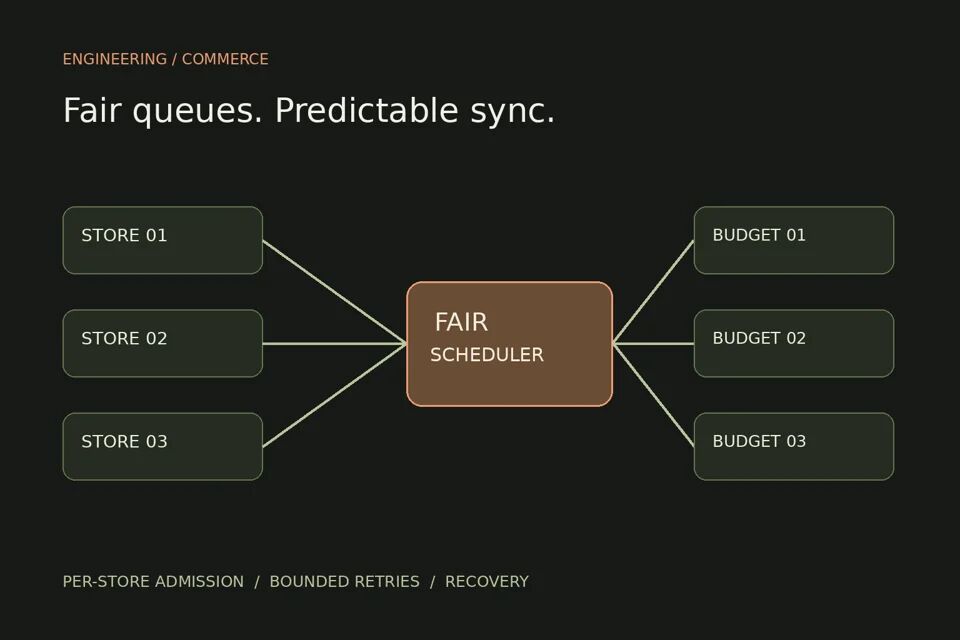
Salla API limits: fair queues before more workers
Design per-store API budgets and fair queues for Salla integrations, with controlled retries, uncertain-write recovery and visible synchronization progress.

Feature flags need an exit plan, not just a toggle
A product-engineering contract for feature flags: stable cohorts, real exposure events, outcome guardrails, failure defaults, progressive rollout and safe cleanup.

Zid reverse orders: separate return approval from refund execution
A practical architecture for Zid returns that separates approval, physical inspection, inventory decisions and refund execution while preventing duplicate financial actions.